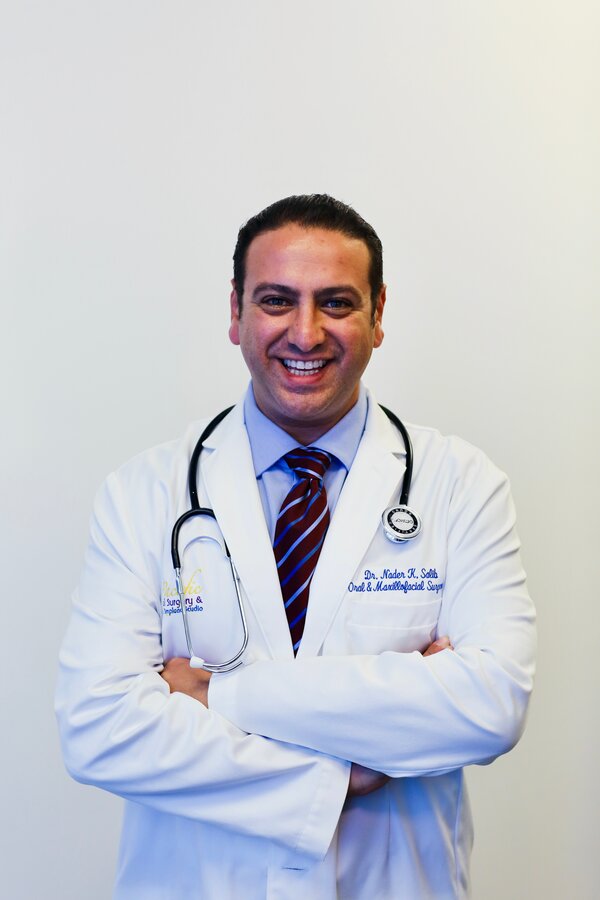
Presented by: Dr. Nader Salib — DDS, Oral and Maxillofacial Surgeon
When: November 10, 2026, 8PM ET / 5PM PT.
Duration: 60 minutes.
Posterior edentulous sites frequently present a combination of limited bone volume, anatomical constraints, altered ridge anatomy, and demanding restorative requirements. Predictable treatment depends on integrating the intended restoration with a thorough assessment of the available hard and soft tissue, implant selection and positioning, and an appropriate grafting strategy.
In this clinically focused webinar, Dr. Nader Salib will present an integrated approach to implant treatment in posterior edentulous and compromised sites. Through clinical cases, he will demonstrate how CBCT evaluation, intraoral scanning, virtual treatment planning, implant macrodesign, and guided or digitally assisted surgery can be combined with site-specific bone grafting strategies. The program will address healed and extraction sites, horizontal and vertical deficiencies, proximity to the maxillary sinus and
inferior alveolar nerve, primary stability, and the clinical decision between simultaneous and staged grafting. Emphasis will be placed on selecting a practical, prosthetically driven treatment pathway that improves predictability while minimizing unnecessary surgical intervention.
Integrated digital planning, implant design with grafting strategies
Course Outline
- Diagnosis and site assessment: Evaluating the restorative objective, ridge anatomy, bone quality and volume, soft-tissue conditions, anatomical limitations, and patient-specific risk factors.
- Integrated digital planning: Combining CBCT data, intraoral scans, and the proposed restoration to establish implant position, angulation, depth, restorative space, and the anticipated need for augmentation.
- Implant design and site preparation: Selecting implant dimensions and macrodesign and adapting the osteotomy and insertion strategy to posterior bone quality, available anatomy, and primary-stability requirements.
- Grafting strategies for compromised sites: Selecting ridge preservation, guided bone regeneration, contour augmentation, or sinus augmentation based on the morphology and extent of the defect.
- Simultaneous versus staged treatment: Determining when implant placement and grafting can be performed together and when a staged approach offers greater biological or restorative predictability.
- Clinical execution and risk reduction: Translating the digital plan to surgery, managing posterior anatomical constraints, protecting graft stability, and recognizing when intraoperative findings require a change in strategy.
Learning Objectives
At the conclusion of this program, participants should be able to:
- Assess the anatomical, biological, and restorative factors that influence implant treatment planning in posterior edentulous and compromised sites.
- Integrate CBCT data, intraoral scans, and the planned restoration to determine implant position and identify augmentation requirements.
- Select implant dimensions, macrodesign, and site-preparation strategies appropriate for posterior bone quality, available anatomy, and primary-stability needs.
- Differentiate among ridge preservation, guided bone regeneration, contour augmentation, and sinus augmentation based on defect morphology and treatment goals.
- Determine when simultaneous implant placement and grafting are appropriate and when a staged approach is indicated.
- Recognize common planning and surgical risks in posterior implant therapy and apply strategies that improve graft stability, implant positioning, and restorative outcomes.